Review: King Sorrow by Joe Hill

Buy it here:

Amazon, Bookshop

Synopsis:

Arthur Oakes is a reader, a dreamer, and a student at Rackham College, Maine, renowned for its frosty winters, exceptional library, and beautiful buildings. But his idyll—and burgeoning romance with Gwen Underfoot—is shattered when a local drug dealer and her partner corner him into one of the worst crimes he can imagine: stealing rare books from the college library.

Trapped and desperate, Arthur turns to his closest friends for comfort and help. Together they dream up a wild, fantastical scheme to free Arthur from the cruel trap in which he finds himself. Wealthy, irrepressible Colin Wren suggests using the unnerving Crane journal (bound in the skin of its author) to summon a dragon to do their bidding. The others—brave, beautiful Alison Shiner; the battling twins Donna and Donovan McBride; and brainy, bold Gwen—don’t hesitate to join Colin in an effort to smash reality and bring a creature of the impossible into our world.

But there’s nothing simple about dealing with dragons, and their pact to save Arthur becomes a terrifying bargain in which the six must choose a new sacrifice for King Sorrow every year—or become his next meal.

Review:

It has been almost a decade since Joe Hill’s last novel The Fireman, so the anticipation was very high for the release of King Shadow. When I brought the book home, I stared at it for awhile. At almost nine hundred pages, I had a lot of anxiety in committing to such a big novel and a lot of curiosity into if King Sorrow is going to be worth the wait. The final verdict is that Joe Hill has written a huge novel that feels like a short novel, and this is the best compliment any large tome can be given.

The story starts with five college age kids hanging out and being friends. They all represent a group, Arthur is the nerd, Colin is the rich kid, Donna and Donovan are the party twins, Allie is the quiet and more repressed kid, and Gwen is the person who comes into the circle as the granddaughter of the help on the estate where Colin lives. Arthur starts to get picked on by a family of lowlifes, two drug selling daughters of an inmate who is in prison for killing her mailman. Colin has figured out that they can solve Arthur’s problems by summoning a dragon from an old journal in his grandfather’s study. What they unleash is King Sorrow, a dragon that needs to kill someone every Easter for the rest of their lives. 

The book takes twists and turns, but mostly it is the journey of a group of people through a forty year span of dealing with a dragon. As the characters grow, so do their personalities and motives. Hill does not let any of the characters stay in the same place they were in when they were still in their teens, and while the years and decades pass, the group cannot help but stay connected over this yearly tradition. The killings by King Sorrow affects everyone differently as well. Some of them deal with their emotional trauma better than others, but the book feels like it takes its time to have all five (and a few new ones along the way) characters naturally progress in their lives and with their growing frustration at having to feed a dragon forty years after they summoned it as kids. 

I also find it beneficial that the novel skips years, and instead of going year by year and turning it into a kill list, Hill takes a few stories, fleshes them out, and makes these the most pivotal moments in the lives of the group. I like that there are many years that are not even mentioned, unless it is in passing as something that they thought about as a mistake, like considering Osama Bin Laden a few years before 2001 but choosing someone else. By structuring the novel this way, with gaps between the narrative, he also gets the opportunity to reintroduce the characters and what they are doing in their lives. This allows an inconsistency that keeps the novel interesting over a large page count because we are given a modified set of characters with each new part. It allows the characters to develop in ways that might have been contradictory to the same character from two decades before. Because people grow and change. I like the story, the construction of the scenes and the enjoyment of the book, but also find the structure of the novel fascinating because there is no way that a book this long should feel this short. Maybe these are tricks that he learned from writing comic books, but there is definitely some kind of magic involved.

I do not know if this is Joe Hill’s best novel, but I do know that it is compelling and every page brings new surprises and challenges to the story. I also know that it really has some great instructions on how to structure a very long book and not allow the story to grow stale. Hill promises at the end of the book that his next novel will not take as long to write, and I hope that he is correct. I don’t want to wait this long for another Joe Hill novel.  

Bonus: I love this very funny interview with Joe Hill on Last Podcast on the Left:
Posted in book review, fiction, horror book reviews, Reviews | Tagged , , , , , , , , , | Leave a comment

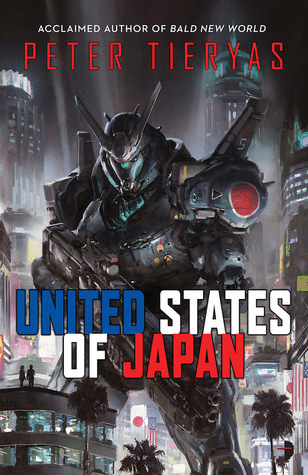
Review: United States of Japan by Peter Tieryas

Buy it here:

Amazon, Bookshop

Synopsis:

Decades ago, Japan won the Second World War. Americans worship their infallible Emperor, and nobody believes that Japan’s conduct in the war was anything but exemplary. Nobody, that is, except the George Washingtons – a shadowy group of rebels fighting for freedom. Their latest subversive tactic is to distribute an illegal video game that asks players to imagine what the world might be like if the United States had won the war instead.

Captain Beniko Ishimura’s job is to censor video games, and he’s working with Agent Akiko Tsukino of the secret police to get to the bottom of this disturbing new development. But Ishimura’s hiding something… He’s slowly been discovering that the case of the George Washingtons is more complicated than it seems, and the subversive videogame’s origins are even more controversial and dangerous than either of them originally suspected.

Part detective story, part brutal alternate history, United States of Japan is a stunning successor to Philip K Dick’s The Man in the High Castle.

Review:

I am old enough to finally find myself interested in World War II, and one of the things I have always thought too much about is what life would be like if the Allies did not win. There are a few novels about a German occupation of America, particularly The Man in the High Castle by Philip K Dick and The Plot Against America by Phillip Roth, but I had not seen any novels about Japan claiming the United States as their land. This is exactly what happens in United States of Japan, and Peter Tieryas builds a United States that is vastly different and incredibly dangerous for anyone who dares to resist total allegiance to the Emperor. 

The timeline of the story goes in several different directions, but the main story is set in July 1988, forty years after the end of the war. A new video game, called United States of America, can be played with the player being the Americans winning the war against Japan. This video game is illegal, and the Japanese Secret Police has sent Agent Akiko Tsukino to find the secret developer of the game. This leads her to Captain Beniko Ishimura, a member of the video game censorship board because if anyone knows how the game USA was created and distributed, it is him. The two of them go on a mission to find the culprit while also trying to stay alive as they navigate the underground groups, making them angry by poking their noses where they do not belong. The story is interesting enough, but their actual journey through a California filled with secret societies living the best life that they can under Japanese rule makes for so many dangerous situations that the book moves fast. 


The novel is very enjoyable, and the development of Ben Ishimura is interesting and fun. He is one of those characters that does not seem like he knows what he is doing, but he always has a plan. He knows people that are willing to help him through the journey to find the developer of USA, and the actual hindrance to his progress is his partner. Akiko, starts the novel with complete devotion to the Empire, but while she goes on this adventure, she learns that not everything is as simple as she wants it to be. She finds herself with many moral conflicts, and in the end she has to learn to grow under the threat of gunfire, torture, and death. The entire novel moves pretty quickly, and I am actually looking forward to reading the next two volumes of the trilogy. Peter Tieryas does a great job of world building and tells a great war/espionage sci-fi story with clear language and no real heroes.

Posted in book review, science fiction review | Tagged , , , , , , , , , , , , , | Leave a comment

Review: Shadow Ticket by Thomas Pynchon

Buy it here:

Amazon, Bookshop

Synopsis:

Milwaukee 1932, the Great Depression going full blast, repeal of Prohibition just around the corner, Al Capone in the federal pen, the private investigation business shifting from labor-management relations to the more domestic kind. Hicks McTaggart, a one-time strikebreaker turned private eye, thinks he’s found job security until he gets sent out on what should be a routine case, locating and bringing back the heiress of a Wisconsin cheese fortune who’s taken a mind to go wandering. Before he knows it, he’s been shanghaied onto a transoceanic liner, ending up eventually in Hungary where there’s no shoreline, a language from some other planet, and enough pastry to see any cop well into retirement—and of course no sign of the runaway heiress he’s supposed to be chasing. By the time Hicks catches up with her he will find himself also entangled with Nazis, Soviet agents, British counterspies, swing musicians, practitioners of the paranormal, outlaw motorcyclists, and the troubles that come with each of them, none of which Hicks is qualified, forget about being paid, to deal with. Surrounded by history he has no grasp on and can’t see his way around in or out of, the only bright side for Hicks is it’s the dawn of the Big Band Era and as it happens he’s a pretty good dancer. Whether this will be enough to allow him somehow to lindy-hop his way back again to Milwaukee and the normal world, which may no longer exist, is another question.

Review:

The latest novel by Thomas Pynchon, Shadow Ticket, is one of those late career novels that people will not read very much. When fans of Pynchon recommend his work, they will suggest the accessibility of The Crying of Lot 49 or the magnitude of Gravity’s Rainbow, or even Vineland or Inherent Vice due to their movie adaptations. Shadow Ticket is really a novel that only the fans can love and will not be one to recruit anyone to become a fan of Thomas Pynchon.

The story centers around Hicks McTaggart, a private investigator with a checkered past working in Milwaukee. He is hired to find a missing heiress to a cheese empire because he has met her before. The story follows Hicks as he looks around Milwaukee until he is eventually drugged and thrown on a steamship to Europe, where he looks around some more. It seems like Hicks is a character that does not really understand much of what’s going on around him. He was a hired as a strikebreaker to beat up people without any questions before he became a investigator, and he did not think much about how dangerous that could be. He is still this way with being an private investigator. He spends the entire book almost clueless to the peril he is in from several different side. He is more lucky than skilled when it comes to getting out of trouble, mostly because he is ignorant to how much trouble he is in. The novel slugs along, and it feels like once it makes the transition from the United States to Europe, the story slows down even more because at least Hicks knew what he was doing next when he was in the United States, who he can see for information, and how the case might be solved with what little skill he possesses. When he gets to Europe, he does not have any resources besides his blind, dumb luck. 

This novel is definitely style over substance. Some of the sentences could be an entire novel in their own right, and there are a few moments of really weird things happening that feel much more interesting than the main story about a guy who is just mucking around, trying to say something funny in every conversation, and looking to stumble into the solution. A few sentences and paragraphs are really rough, like they needed a bit of editing and cleaning up because the words are too intertwined within themselves to be unknotted easily. This makes Shadow Ticket difficult to read sometimes, and it took much longer to get through this 300 page book than most other books simply because I had to reread so much to figure out exactly what is trying to be explained. For most of his career, Pynchon has been worth this effort, but by the final pages of Shadow Ticket, the only thing I wanted the book to do was end so I could read anything else.   

Posted in book review, fiction, literary book review, Reviews | Tagged , , , , , , , , | Leave a comment

Review: Annie Bot by Sierra Greer

Buy it here:

Amazon, Bookshop

Synopsis:

Annie Bot was created to be the perfect girlfriend for her human owner, Doug. Designed to satisfy his emotional and physical needs, she has dinner ready for him every night, wears the cute outfits he orders for her, and adjusts her libido to suit his moods. True, she’s not the greatest at keeping Doug’s place spotless, but she’s trying to please him. She’s trying hard.

She’s learning, too.

Doug says he loves that Annie’s artificial intelligence makes her seem more like a real woman, but the more human Annie becomes, the less perfectly she behaves. As Annie’s relationship with Doug grows more intricate and difficult, she starts to wonder whether Doug truly desires what he says he does. In such an impossible paradox, what does Annie owe herself?

Review:

I read Annie Bot quite some time ago, and my opinion of the story has evolved over time. At the crux of the story, Annie Bot is an android that is learning about being a better partner through artificial intelligence, learning to be the partner that Doug wants her to be. The truth is that this novel is not about Annie Bot as much as a character study in the way that Doug treats women and behaves in relationships. When she is brought home, Annie Bot is someone who is there to clean and help around the house. Doug decides to switch her to the companion mode, to becomes his romantic partner, and from there, Doug tries to mold her into who he wants her to be. He purchases Annie Bot as a response to the break up of his marriage, and the truth is that through the novel, we discover that he has not learned a thing about the dissolution of his previous relationships and that there are plenty of reasons why his previous relationship did not work. Annie Bot is the perfect companion for him because anyone with their own opinions and personality is not going to tolerate his behavior. 

There are more and more novels that have artificial intelligence as an aspect of the story, and many of center on an android that is learning about life and the things surrounding them. Many of these stories present a healthy fear of AI because the truth is that we do not want machines that can outwit us. Maybe it comes back to watching 2001: A Space Odyssey. The AI can be smarter than us, know more facts and what the weather is like outside at any time, but the moment that they can manipulate the situation and defeat us is the moment that we fear. We are okay with AI helping make life a little easier, but we do not want to be replaced, and we do not want Artificial Intelligence to be favored over the difficult work that we do simply because it is easier and cheaper. The truth is that regardless of how great an artificial intelligence program can be, it cannot replace a person or a relationship. In Annie Bot, Doug uses Annie Bot not only to grieve but to try to replace something that he is missing. This type of relationship between person and machine will never be satisfying in the same way that a real personal relationship would be, and Doug knows this but he ignores it. Instead he keeps trying and digging deeper into a hole that an artificial program cannot fill.


In the end, Annie Bot spends less time on the science and technology aspect of the story and more time on the way that the relationship unfolds. This is more of an exploration of several different ways that we interact with technology, sometimes using it to help, sometimes abusing it for fun, sometimes ignoring it all together. The final truth is that technology, no matter how advanced or enticing, will never be an adequate replacement for a human relationship.

Posted in book review, fiction, literary book review, Reviews, science fiction review | Tagged , , , , , , , , , , , , | Leave a comment

Review: The Mountain in the Sea by Ray Nayler

Buy it here:

Amazon, Bookshop

Synopsis:

Humankind discovers intelligent life in an octopus species with its own language and culture, and sets off a high-stakes global competition to dominate the future.

Rumors begin to spread of a species of hyperintelligent, dangerous octopus that may have developed its own language and culture. Marine biologist Dr. Ha Nguyen, who has spent her life researching cephalopod intelligence, will do anything for the chance to study them.

The transnational tech corporation DIANIMA has sealed the remote Con Dao Archipelago, where the octopuses were discovered, off from the world. Dr. Nguyen joins DIANIMA’s team on the islands: a battle-scarred security agent and the world’s first android.

The octopuses hold the key to unprecedented breakthroughs in extrahuman intelligence. The stakes are high: there are vast fortunes to be made by whoever can take advantage of the octopuses’ advancements, and as Dr. Nguyen struggles to communicate with the newly discovered species, forces larger than DIANIMA close in to seize the octopuses for themselves.

But no one has yet asked the octopuses what they think. And what they might do about it.

A near-future thriller about the nature of consciousness, Ray Nayler’s The Mountain in the Sea is a dazzling literary debut and a mind-blowing dive into the treasure and wreckage of humankind’s legacy.

Review:

The debut novel by Ray Nayler, The Mountain in the Sea, is an exploration on the future of the world if AI continuous to develop, if the oceans are dredged until every living creature is fished to near extinction, and if corporations still control everything. The main story is about Dr. Ha Nguyen and her appointment to an island to study a colony of octopus and possibly a sea monster. She is met there by the only AI driven humanoid, created by the DIANIMA corporation before it was outlawed due to it’s creepiness. The two of them work together to dive in the ocean, film and study the movements of the octopus colony. They decide that they are trying to communicate and figuring out their language to communicate back becomes their only mission.

Some of this novel moves fast, and even at 450 pages, I am glad that the novel goes by quick and that there is not really a great deal of depth to bog me down. The story is interesting in the way alien stories are interesting. Those first contact stories where the people and the aliens try to communicate (I kept thinking about the movie Arrival the whole time I was reading this), and there are similarities between species that wants to communicate with you in the ocean and a species that wants to communicate with you in outer space. The eerie feeling is that there is danger in work that is being done, that if the characters do find out what the other species is trying to say, they will learn something they never wanted to learn. This is a compelling concept and it does give this story tension, especially since it is established early in the novel that these octopus can easily kill someone without an ounce of remorse. 


Some of the topics addressed in this novel are also topics that we will have to explore in the near future, like the acceptance of AI, and what happens when it becomes so good that they are running the corporations without humans, the fishing boats without an override, and when things go wrong, AI does not understand that there has to be an alternative plan. Questions like what it means to be a human, and if AI continues to advance, when will the line be erased between computers returning information and an actual consciousness? What can we learn from studying animals that will be beneficial to the way that we live our future lives, and will anyone listen? And how can we do anything under the shadow of corporations who own everything, including the oceans, the land, and most of the people living on them? There is a feeling of impending doom throughout the novel The Mountain in the Sea, but the doom is not for just the characters in the story but for us, as humans, and for the world that we live in.

Posted in book review, literary book review, Reviews, science fiction review | Tagged , , , , , , , , , , | Leave a comment

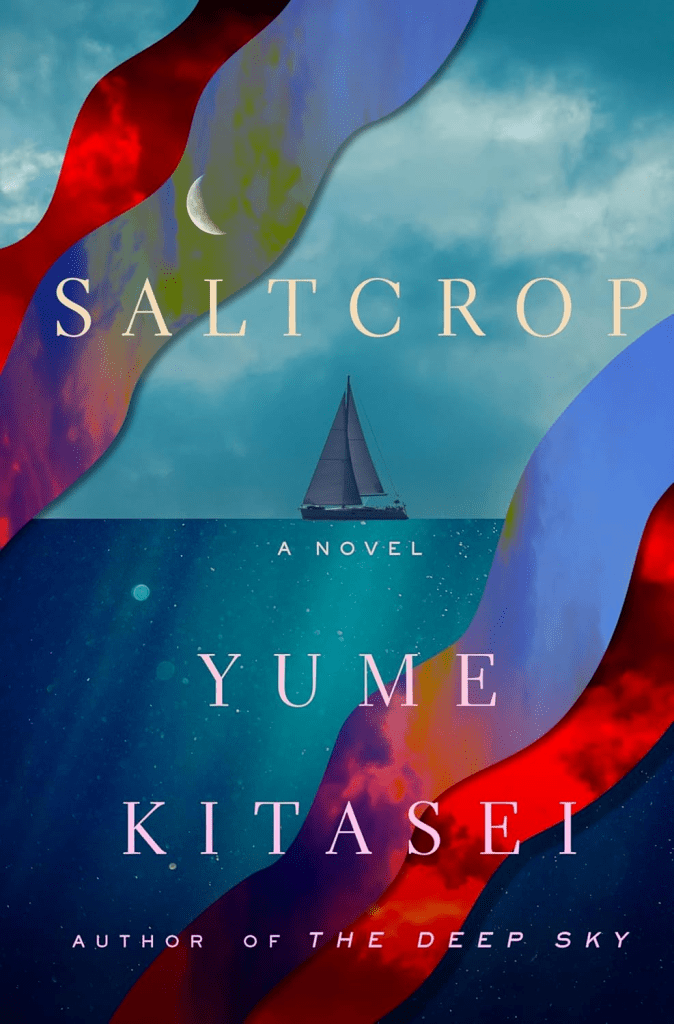
Review: Saltcrop by Yume Kitasei

Buy it here:

Bookshop, Amazon

Synopsis:

From the acclaimed author of The Stardust Grail comes the epic tale of two sisters who sail across oceans to find their missing third sister―and Earth’s environmental salvation.

In Earth’s not too distant future, seas consume coastal cities, highways disintegrate underwater, and mutant fish lurk in pirate-controlled depths. Skipper, a skilled sailor and the youngest of three sisters, earns money skimming and reselling plastic from the ocean to care for her ailing grandmother.

But then her eldest sister, Nora, goes missing. Nora left home a decade ago in pursuit of a cure for failing crops all over the world. When Skipper and her other sister, Carmen, receive a cryptic plea for help, they must put aside their differences and set out across the sea to find―and save―her. As they voyage through a dying world both beautiful and strange, encountering other travelers along the way, they learn more about their sister’s work and the corporations that want what she discovered.

But the farther they go, the more uncertain their mission becomes: What dangerous attention did Nora attract, and how well do they really know their sister―or each other? Thus begins an epic journey spanning oceans and continents and a wistful rumination on sisterhood, friendship, and ecological disaster.

Review:

Saltcrop is the story of the bond of three sisters, Nora, Carmen, and Skipper. The world is flooded and coastal cities have been reclaimed by the ocean. All of crops get blight and many people are starving to death before Renewal creates pesticides that give crops a defense against disease. When the family stops hearing from Nora, who lives in a large city and works for the major seed corporation, they starts to worry, especially after they get news from her work that they needed to get her things before they are thrown away. Skipper has spent her life working and living with her sailboat as her solitary love, so she decides that she is going to sail to the city and figure out what happened to Nora. Even though her middle sister Carmen and her do not really get along very well, Carmen decides that she is going to come with her. What unfolds is an adventure of epic proportions, complete with danger, pirates, corporate espionage, and growth as individuals and as siblings.

The first half of this novel is so compelling. The story pulls at you from three different angles: learning about the new world that is flooded and dying, characters that do not exactly get along but are doing the best they can for the benefit of another (in this case finding their sister and finding out why she disappeared}, and the sheer anxious danger that is around every turn. Novels on boats and ships always have an added anxiety because the boat is an isolated setting, where death is imminent outside of the immediate location. The sisters travel during tumultuous storms, pirate raids, and they have to trust people that should not be trusted. All of these things lends a consistent anxiety and danger. This feeling does shift to a different setting later in the novel but does not relent. 

One of the more impressive aspects of the writing is the way that Yume Kitasei not only builds the world but builds the relationships between the characters. In one small scene toward the beginning of the novel, we get the entire picture of the relationship between Skipper and Carmen. They are just starting their journey on the sailboat. Skipper makes beans and is embarrassed that she cannot offer her sister more. She is afraid that when cooking them, she oversalts them, so she spends the whole time watching Carmen eat, seeing how many drinks of water she takes because of the saltiness and notices when Carmen does not finish them. This is such a small scene, but it tells so much about how Skipper feels like she needs to impress Carmen, that she feels a little bit inferior to her sister, and that this dynamic will be tested quickly and often.

I did not know what to expect when I started Saltcrop so it was a pleasant surprise to get pulled into a story about two sisters trying to find a third. It seems like such a simple, classic plot, but so much is done with the story that it makes Saltcrop a unique experience that I will remember for a long time. I am interested in reading Yume Kitasei’s previous novels. If they are anywhere as close to as good as Saltcrop, I will have another author whose writing I will always be excited to read. 

Posted in book review, literary book review, Reviews, science fiction review | Tagged , , , , , , , , , , | Leave a comment

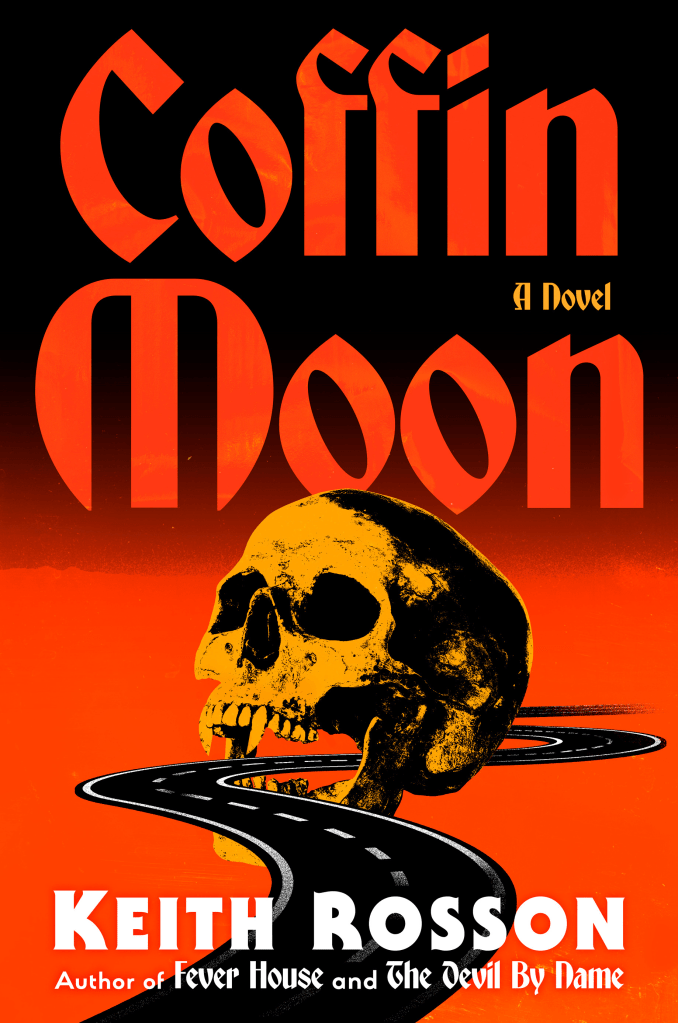
Review: Coffin Moon by Keith Rosson

Buy it here:

Amazon, Bookshop

Synopsis:

From the author of the “exciting, suspenseful, horrifying” (Stephen King) Fever House, a Vietnam veteran and his adopted niece hunt—and are hunted by—the vampire that slaughtered their family.

It’s the winter of 1975, and Portland, Oregon, is all sleet and neon. Duane Minor is back home after a tour in Vietnam, a bartender just trying to stay sober; save his marriage with his wife, Heidi; and connect with his thirteen-year-old niece, Julia, now that he’s responsible for raising her. Things aren’t easy, but Minor is scraping by.

Then a vampire walks into his bar and ruins his life.

When Minor crosses John Varley, a killer who sleeps during the day beneath loose drifts of earth and grows teeth in the light of the moon, Varley brutally retaliates by murdering Heidi, leaving Minor broken with guilt and Julia filled with rage. What’s left of their splintered family is united by only one desire: vengeance.

So begins a furious, frenzied pursuit across the Pacific Northwest and beyond. From grimy alleyways to desolate highways to snow-lashed plains, Minor and Julia are cast into the dark orbit of undead children, silver bullet casters, and the bevy of broken men transfixed by Varley’s ferocity. Everyone’s out for blood.

Gritty, unforgettable, and emotionally devastating, Coffin Moon asks what will be left of our humanity when grief transmutes into violence, when monsters wear human faces, and when our thirst for revenge eclipses everything else.

Review:

I have known for a long time that Keith Rosson is a talented writer. From his early novels with Meerkat Press to his most recent success with the Fever House books, his writing style and his storytelling is unique and powerful. In his latest novel Coffin Moon, he takes these talents and turns them up to make one of the best vampire novels that I have ever read.

The story starts with Vietnam veteran, Duane Minor, working at his mother-in-law’s bar, living in the apartment above the bar with his wife and his teenage niece Juila, making it day to day while taking care of his family. When some bikers start coming into the bar, Duane becomes suspicious, and when he catches them selling drugs, he becomes furious. What spirals from this single encounter between Duane and the bikers becomes the event that spirals Duane’s life out of control. Simply because in messing with the bikers, he messed with the leader, John Varley. 

John Varley is a monster, and one of the scariest characters that I have read in a long time. He does not only want blood. He does not only want to kill. He wants to destroy people, rip them into pieces, make them suffer before turning them into a crime scene that will make detectives vomit. He has been a vampire for generations, and his singular focus is to get enough money to move to Alaska with his love Johan where it is dark for months at a time, and he can live off of the land. Of course they are being hunted, but Varley feels like his power as a vampire and his love for Johan will help him conquer anything.

I have always said that vampire stories have a homoerotic undertone to them, and I love that Varley and Johan are a couple, that they embrace this undertone and bring it to the forefront, make their love the reason why they want immortality, and how companionship and love can make you take the most extreme actions. I love all sides of this story, from the ruthless predatory acts of Varley to the driving anger of Duane. The entire novel flows so well, and the only thing that I could think at the end was that I want more John Varley story, but then Coffin Moon might be the perfect length with the perfect amount of Varley because his brutality never gets old, the feelings stay powerful, and in the end, it is one of the most satisfied vampire stories I have ever read. It makes me want to read everything else that Keith Rosson ever writes. 

I received this as an ARC from NetGalley in exchange for an honest review.

Posted in book review, horror book reviews, Reviews | Tagged , , , , , , , , , , , , | Leave a comment

Review: The Woman in Cabin 10 by Ruth Ware

Buy it here:

Amazon, Bookshop

Synopsis:

Lo Blacklock, a journalist who writes for a travel magazine, has just been given the assignment of a lifetime: a week on a luxury cruise with only a handful of cabins. The sky is clear, the waters calm, and the veneered, select guests jovial as the exclusive cruise ship, the Aurora, begins her voyage in the picturesque North Sea. At first, Lo s stay is nothing but pleasant: the cabins are plush, the dinner parties are sparkling, and the guests are elegant. But as the week wears on, frigid winds whip the deck, gray skies fall, and Lo witnesses what she can only describe as a dark and terrifying nightmare: a woman being thrown overboard. The problem? All passengers remain accounted for and so, the ship sails on as if nothing has happened, despite Lo’s desperate attempts to convey that something (or someone) has gone terribly, terribly wrong.

Review:

The movie adaptation of The Woman in Cabin 10 was just released on Netflix, and I decided that since I had the hardback on my shelf for almost nine years, I should finally read it. I am glad that I delved into the novel before I watched the film because there are so many nuances to the story that are completely lost in the adaptation that are integral to the success of Ruth Ware’s story.

The novel starts with Lo Blacklock, a travel journalist who is trying to make a name for herself at a magazine, getting an invitation to go on the inaugural cruise of the Aurora, a private ship that is owned by Richard Bullmer’s company. After she gets settled into her cabin and has too many drinks the first night of the cruise, she is woken by a fight and a splash of someone going overboard, someone from cabin 10. When she causes an alarm that someone is in the water, she is informed that Cabin 10 has been empty. The rest of the novel perfectly unfolds in the tight quarters of a ship at sea, where someone has to know what happened and someone on the boat has to be the killer. Of course the way that the other passengers and staff treat her, like she is delusional due to her her anxiety and stress or she was just drunk and hearing things, makes for a much more intense experience than the film because they use gaslighting and coverup to try to get Lo Blacklock to stop asking questions. 

For a novel that is not necessarily something that I would normally read, I enjoyed the isolated setting of it. The ship is all alone on the sea. There is no communication between the passengers and anyone off of the boat, and this isolation intensities the danger. The claustrophobic feeling reminds me of the Alfred Hitchcock film, The Lady Vanishes, where a woman vanishes on a speeding train and everyone tries to convince the passengers that the lady never existed. Ruth Ware takes the feeling that Lo cannot trust anyone on the ship except for what she knows, even when people are assuring her that her memories are wrong, and ratchets up the mystery and the danger until Lo is in just as much danger as the woman she heard splash into the water. 

The film falls short of the novel, like most movies do, because it cuts out some of the major tension that the novel has, particularly how her past mental health was used against her to gaslight her into making her doubt herself, and how there are people at home, off of the boat, particularly a boyfriend, that are looking for her when she is missing after the ship is docked at their destination. The novel makes the reader feel like Blacklock is in more danger than in the movie, and the final act is far more interesting and well structured than the ending of the movie. I definitely would read the novel again before I watched the movie again.

Posted in book review, fiction, Reviews | Tagged , , , , , , , , , , , , | Leave a comment

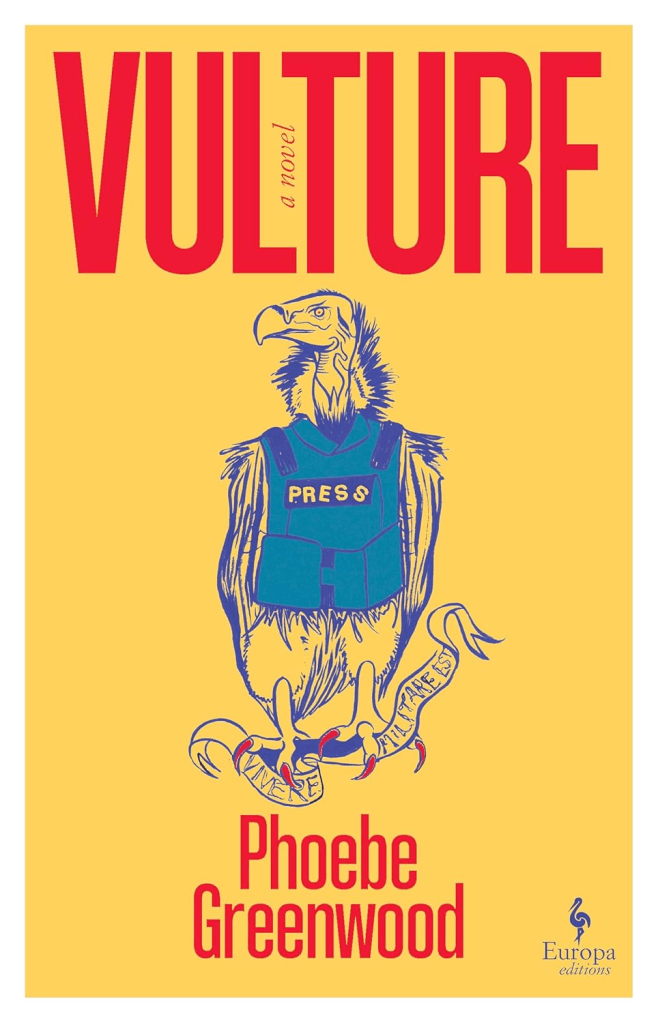
Vulture by Phoebe Greenwood

Buy it here:

Amazon, Bookshop

Synopsis:

Catch-22 on speed and set in the Middle East, Vulture is a fast-paced, brilliant satire of the war news industry and its moral blind spots.

An ambitious young journalist, Sara is sent to cover a war from the Beach Hotel in Gaza. The four-star hotel is a global media hub, promising safety and generator-powered internet, with hotel staff catering tirelessly to the needs of the world’s media, even as their homes and families are under threat. 

Sara is determined to launch herself as a star correspondent. So, when her fixer Nasser refuses to set up the dangerous story she thinks will win her a front page, she turns instead to Fadi, the youngest member of a powerful militant family. Driven by demons and disappointments, Sara will stop at nothing to prove herself in this war, even if it means bringing disaster upon those around her. 

Greenwood’s debut novel brings readers into the heart of the maelstrom, and with audacity and humor depicts the media’s complicity in the ongoing tragedy. 

Review:

Vulture is marketed as “A Darkly Funny, Heart-wrenching satire”, and this is an important thing to remember when reading about Sara’s journey through the Middle East. Sara is an ambitious journalist trying to get out of the large shadow her father casts. She is staying at a journalist saturated hotel in Gaza, when she sees all of the well established journalists every morning at breakfast getting ready to write their great stories, she feels that pressure to become a more important name in the room. This ambition leads her to be careless, demanding, impulsive, and to forget that there are actual humans involved on the other side of the stories she is trying to write. As a reader, it is difficult to like Sara from the beginning, not because of the way that she treats other people, but the way that she views them as humans, as if they are just props that will help her to succeed. We can see that Sara is one of those people that will use anyone to gain an advantage and if she is successful, she will immediately forget anyone who helped. 

Vulture is a perfectly fitting title. We see vultures as scavengers, ones who eat off of carcasses of animals, but also ones who will kill the animals who are wounded and sick. In the case of Vulture, the entire hotel of journalists is finding nourishment on the bombings and killings of the citizens around them. They are rushing to these events, picking the bones of the victims, asking questions of the survivors that feel intrusive and callous in a moment where a person has lost everything, and rushing back to their computers and Wi-Fi to report these stories back as fast as possible to the world. The satisfaction of getting their articles, meeting their deadlines, and possibly winning an award at the end of the year is the sort of nourishment that the journalists find in all of the death around them. Sara spends the entire book looking for her own carcass, one she does not have to share, even if that means creating one.

I found Vulture to be a frustrating novel at some points. There are moments when the humanity of the situation is not considered because ambition is way more important. There are moments when the citizens, the hotel workers, and the victims are treated as subhuman, people whose intelligence and opinions do not matter in the moment because the journalists know best. I see some of the colonialism that comes from journalists from around the world coming to Gaza to take over, to get stories about a culture they know very little about, and it is almost like the local politics and actual danger of the situation are just hurdles to jump to get the real story. This is satire at it’s best because it is really bringing up these issues without flinching, and it is up to the reader to sort it out and form an opinion. 

I received a galley from Europa Editions in exchange for an honest review.

Posted in book review, literary book review, Reviews | Tagged , , , , , , , , , , | Leave a comment

Review: The Vampire of Plainfield by Kristopher Rufty

Synopsis:

Plainfield, Wisconsin. 1954. Robbing graves to appease his malevolent desires, Ed Gein inadvertently sets loose an ancient vampire on the unsuspecting town of Plainfield. As the number of missing persons rises, Ed realizes the vampire’s ultimate plan has been put into motion, and to prevent his dastardly practices from being exposed, he decides to slay the vampire himself. But he soon understands that he’s all the hope Plainfield has. As the few people closest to Ed are sucked into the vampire’s realm, he’ll be forced to reach deep inside himself to bring the incredible nightmare to an end. On this night, the Ghoul of Plainfield must battle the Vampire of Plainfield…to the death!

Review:

I have been wanting to read The Vampire of Plainfield for quite some time. The premise of Ed Gein, serial kiiler and model for so many fictional serial killers, from Leatherface to Norman Bates to Buffalo Bill in The Silence of the Lambs, Gein has been a fixture in popular culture and American serial killer fiction for many decades. Kristopher Rufty uses Ed Gein has the centerpiece of the story, a outsider in town who spends many nights digging up graves for heads and body parts. When he finds an old graveyard in the woods and decides to dig up these older graves, he finds that one of the graves is of a corpse with a stake through his heart. He thinks it would be a good money maker to pull the stake out and then ram it back in, over and over, gathering crowds of people to see the spectacle, but as soon as he releases the stake, the vampire flies off and starts killing people in town. Ed Gein knows that he has to find this vampire and put it back into it’s eternal resting place. 

The premise sounds like a great horror novel, vampire against killer, but the story becomes more than that, and most of the extra things are not good. There are many choices that Rufty makes in the novel that are awful, especially when it involves the kids that he writes into the novel. He tries to make the novel more like Salem’s Lot, where Ed has a young man that helps him, but fourteen year old Timmy and his friends are horny and sex is more important to them than getting rid of the vampire. Timmy’s friend Peter is written to be the most horrible person in the novel, more horrible than a serial killer and a vampire. Peter is a classmate of Timmy’s that kidnaps and repeatedly sexually assaults a 10 year old girl before both of them become vampires. Timmy’s love interest, Robin, who is at least seventeen, has her clothes ripped off of her toward the end, and in the middle of the fight between Timmy and the vampire, Timmy has to stop and think about how Robin’s breasts are giving him an erection. All of the descriptions of breasts are the same: a description of the shape and then the size of the nipple. I do not want to read this about underage characters in this way, and it makes the parts about Ed Gein and his obsession with dead bodies, shrinking heads, and wearing the skin of a woman as armor, the least offensive parts. 


I had high hopes for The Vampire of Plainfield, but I cannot get past all of the sexualizing of the underage characters, particularly the ten year old who is repeatedly assaulted. It is unfortunate because I love the ideas behind the plot, I would have liked a more adult focused version of this, where there are no kids getting raped, but instead I have to be clear that this is not a book that I can ever recommend to anyone.

Posted in book review, fiction, horror book reviews, Reviews | Tagged , , , , , , , , , , , , | Leave a comment